
Key Stages of Greenfield Pharmaceutical Cleanroom EPC Project Management
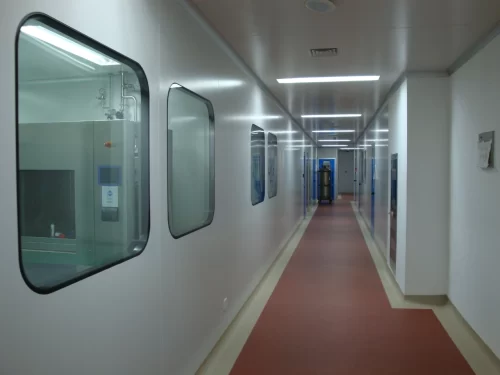
1. Phase 1: Greenfield Cleanroom Foundation Requirements
Before breaking ground, pharmaceutical companies must address critical infrastructure elements dictated by regulatory compliance. Unlike conventional construction, cleanroom foundations must prepare integrated coving, specialized flooring materials, and seamless transitions that minimize particle accumulation points. Farclean’s engineers collaborate extensively with architects and regulatory specialists to verify site suitability through accurate soil analysis and structural capacity reviews.
- Regulatory Documentation Development: Farclean facilitates preparation of comprehensive documentation demonstrating how proposed structural elements support applicable 21 CFR Part 211 and EU GMP standards, particularly around surface classifications and pressure differential requirements.
- Orbital Welded Copper Piping Integration Planning: For pharmaceutical water systems requiring ASTM B323-compliant tubing, early planning ensures seamless integration of bulk water tanks, deionization units, and final point connections in all cleanroom components.
- Foundation Coving & Containment Design: Our systems incorporate factory-verified coving in wall panels to prevent vertical crevices where contaminants could accumulate, meeting essential requirements for Annex 1-compliant surfaces.
2. Phase 2: Controlled Environment Infrastructure Implementation
The construction phase represents the most visible manifestation of pharmaceutical compliance requirements, involving careful implementation of IEST-1-2020 contamination control practices alongside strict adherence to the building codes. This detailed stage requires balancing weight limitations with airtight integration, particularly around personnel and gilding entry systems.
- Modular Wall System Integration: Farclean’s integrated wall panels feature seamless gasketing and orbital welding along all field joints to create ISO-class compatible pressure boundaries, reducing particle infiltration without requiring separate vapor sealing.
- High-Efficiency Filtration Implementation: Each cleanroom system includes precision-verified HEPA/ULPA filtration with flow measurements and pressure drop profiles to ensure particulate counts meet required ISO classifications throughout critical pharmaceutical process zones.
- Cleanroom Door System Compatibility: All personnel and utility access points employ our purpose-designed cleanroom doors with edge-sealed frames, ensuring consistent particle containment despite high-frequency use patterns.
- Seamless Surface Joinery: Modular integration at wall-ceiling interfaces prevents traditional “step-downs” that create particle reservoirs, facilitating both construction compliance verification and ongoing GMP maintenance.
3. Phase 3: Regulatory Certification & Documentation
Perhaps the most misunderstood aspect of pharmaceutical construction, the validation phase encompasses extensive documentation demonstrating ongoing compliance with the numerous regulations governing critical manufacturing parameters and environmental controls.
- Dynamic Pressure Validation: Comprehensive leak testing confirms structural panels’ ability to maintain required negative air pressure relationships between containment zones according to 21 CFR Part 211.116, particularly vital in areas with potent cytotoxic agents.
- Surface ATP Validation: Regular rapid microbial testing verifies the effectiveness of cleanroom finishes in preventing microbial accumulation, supporting requirements from EU GMP Annex 1.
- Environmental Monitoring Programs (EMPs): Detailed qualification protocols verify proper functioning of both personnel and product air streams, ensuring HEPA filtration efficiency and operator safety requirements are met for each specified ISO class.
- IQ/OQ/PQ Documentation: Complete installation, operational, and performance qualification packages maintain regulatory compliance during scheduled facility revalidation every 24 months as required by international standards.
4. EPC Project Management Impact Analysis Matrix
The table below categorizes typical considerations for pharmaceutical EPC projects and their resource impact implications:
| Project Element | Critical Pharmaceutical Standards | Resource Impact |
|---|---|---|
| Criticality Analysis | ICH Q9 Pharmaceutical Quality System Requirements | +10% to +30% Schedule Impact |
| Wall Panel Design | ISO 14644-4 Cleanroom Construction Specifications | +15-25% Materials Cost Increase |
| Pressure Envelope | FDA Guidance for Industry: Current Good Manufacturing Practice | +8-15% Energy Utilization Cost |
| Validation Protocols | EU GMP Annex 1 – General Principles, Points | +5-10% Labor Cost Allocation |
| Utility Penetrations | ISO 14644-2 Test Methods for Particle Counting | +12-20% Field Labor Variance |
5. EPC Project Optimization Strategies
- Premier Design-Build Integration: Partnering with Farclean enables collaboratively approved system design prior to any field fabrication, integrating required features into our standard panelized systems to prevent reactive additions during installation.
- Building Information Modeling (BIM) Application: Comprehensive 3D BIM coordination across structural, HVAC, and utility systems identifies potential conflicts 60+ days in advance, substantially reducing change orders for critical pharmaceutical projects.
- Discrete Component Manufacturing: Our Advanced Manufacturing facility produces specialized components like automated door operators and custom pass-throughs based on client specifications, creating systems that exceed standard industry requirements.
- Regulatory Waiver Advocacy: Our team specializes in identifying where project requirements might qualify for performance-based departures from prescriptive standards, balancing cost effectiveness with rigorous quality assurance.
6. Building Regulatory-Compliant Pharmaceutical Infrastructure
Turning greenfield concepts into operational pharmaceutical facilities requires an elite understanding of project sequencing and configuration requirements. Farclean leverages decades of specialized experience to navigate complex project parameters according to specific regulatory expectations—whether your operation requires ISO 14644 Class 3 or 8, GMP validation requirements, or specialized containment technologies.
Request a Project Consultation Today to discuss how Farclean’s unique EPC methodology can produce both strategically compliant and cost-efficient cleanroom infrastructure for your pharmaceutical manufacturing requirements.