
Cleanroom Automation Systems Market Outlook 2025–2030: The Digital Transformation of Controlled Environments
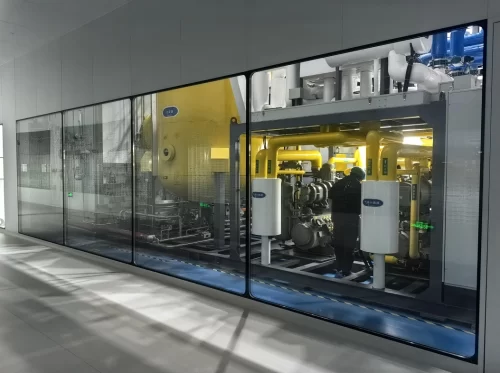
The global manufacturing landscape is undergoing a massive paradigm shift toward lights-out manufacturing, predictive maintenance, and stringent digital compliance. As industries such as pharmaceuticals, biotechnology, semiconductor fabrication, and medical device manufacturing demand higher precision and lower human-induced contamination risks, automated infrastructure has transitioned from a luxury to a core operational necessity. The Cleanroom Automation Systems Market Outlook 2025–2030 highlights an era where intelligent control, real-time telemetry, and robotics converge to redefine high-purity environment management.
Key Growth Drivers in Cleanroom Automation
The rapid expansion of automated cleanroom solutions is propelled by several compounding technological and market forces:
1. Stringent Regulatory and Quality Standards
Global regulatory bodies (such as the FDA, EMA, and ISO) are enforcing stricter validation requirements, data integrity mandates (ALCOA+), and continuous monitoring standards. Automated systems eliminate manual logging errors, ensuring permanent, tamper-proof audit trails for environmental parameters like differential pressure, particle counts, temperature, and humidity.
2. Minimizing Human Intervention (The Primary Source of Contamination)
Human operators remain the single largest vector of particulate and microbial contamination inside a cleanroom. Integrating automated material handling systems (AMHS), robotics, and conveyor lines minimizes personnel presence during critical manufacturing phases, directly boosting production yields.
3. Energy Efficiency and Smart HVAC Integration
With sustainability and rising energy costs at the forefront of corporate agendas, modern automated cleanrooms deploy demand-controlled ventilation (DCV) and AI-driven Building Management Systems (BMS). These systems dynamically adjust air change rates, fan filter unit (FFU) speeds, and pressure cascades based on real-time occupancy and cleanroom activity.
Core Technology Trends Shaping the 2025–2030 Horizon
As we navigate through the latter half of the decade, several specific technological trends are dominating cleanroom engineering roadmaps:
- IoT-Enabled Wireless Sensor Networks: Transitioning from cumbersome wired setups to dense, flexible IoT sensor matrices for hyper-local environmental tracking.
- Modular Automation Compatibility: Designing modular cleanroom walls, interlocking doors, and pass-through boxes that seamlessly integrate with automated robotic transfer hatches and AGVs (Automated Guided Vehicles).
- Predictive Maintenance via AI Analytics: Utilizing machine learning algorithms to forecast HEPA filter degradation, fan motor fatigue, and valve failures before unexpected downtime occurs.
Future-Proofing Your Facility with Farclean
Adapting to the automated future requires an infrastructure built on precision, flexibility, and architectural compatibility. Whether you are upgrading an existing facility or constructing a brand-new high-tech cleanroom plant, integrating smart automation begins with a robust structural foundation.
Partner with Farclean to combine high-performance cleanroom enclosures, modular panel systems, and advanced environment configurations tailored for the automated era.
Ready to align your cleanroom infrastructure with next-generation automation standards? Contact Farclean today to consult with our engineering and integration specialists.