
Why Differential Pressure Matters in Cleanrooms: Engineering Control and Compliance
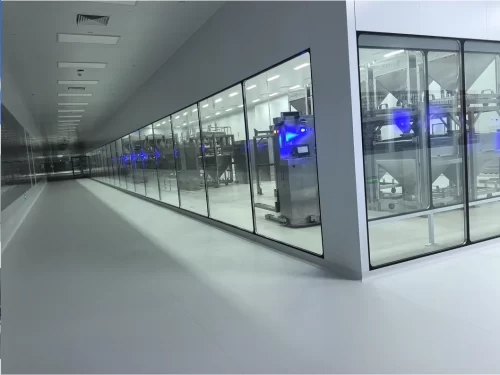
In any controlled environment, maintaining strict particulate counts and temperature is only part of the equation. The invisible guardian of contamination control is air pressure. Understanding why differential pressure matters in cleanrooms is essential for facility managers, engineers, and quality assurance teams operating in pharmaceutical manufacturing, semiconductor fabrication, and hospital compounding suites. Precise pressure management ensures that air flows strictly in the desired direction, acting as an invisible physical barrier against airborne contaminants.
The Core Principle: What Is Cleanroom Differential Pressure?
Differential pressure refers to the difference in static pressure between two distinct areas—such as between a cleanroom and an adjacent corridor, or between an ante-room and a main processing suite. By engineering a pressure cascade, airflow is deliberately controlled so that air always moves from areas of higher cleanliness and pressure to areas of lower cleanliness and pressure.
1. Preventing Cross-Contamination
When doors open or minor leaks occur, a positive pressure differential ensures that internal clean air rushes outward, preventing unconditioned, particle-laden air from entering the critical workspace.
2. Containing Hazardous Agents
Conversely, in environments handling biological hazards, potent pharmaceutical powders, or infectious agents, negative pressure is utilized. This ensures that hazardous particles are trapped within the room and safely routed through HEPA filtration systems before exhausting.
3. Meeting Regulatory Standards (ISO, GMP, and FDA)
Global regulatory bodies mandate strict compliance regarding pressure differentials. Without properly validated pressure gradients, a facility cannot pass certification or maintain its required ISO classification.
Key Components for Maintaining Optimal Differential Pressure
Achieving and sustaining stable differential pressure requires an integrated approach to architectural design, HVAC configuration, and hardware selection. At Farclean, our cleanroom engineering methodology focuses on several critical elements:
- Precision HVAC and Air Change Design: Calculating exact supply and exhaust air volumes to maintain steady-state pressure gradients regardless of operational shifts.
- Hermetic Modular Wall Systems: Using precision-engineered modular panels that eliminate air leakage through joints, ensuring the cleanroom envelope remains airtight.
- Airtight Cleanroom Doors: Installing specialized flush cleanroom doors equipped with drop-down seals to minimize air loss at high-traffic transitional thresholds.
- Real-Time Monitoring and Interlocks: Deploying digital magnehelic gauges and electronic door interlocks to prevent multiple doors from opening simultaneously and collapsing the pressure cascade.
How Modular Construction Enhances Pressure Control
Traditional stick-built construction often suffers from micro-cracks, settling, and sealant degradation over time, leading to pressure leakage and failed validation tests. Modern modular construction minimizes these vulnerabilities through:
- Factory-Controlled Tolerances: Prefabricated modular wall panels and cleanroom components offer superior dimensional accuracy and seamless flush integration.
- Structural Stability: Rigid framing systems resist deflection caused by internal pressure variations, maintaining structural integrity under continuous HVAC operation.
- Rapid Troubleshooting and Maintenance: Modular designs allow for easy inspection and localized adjustments if pressure boundaries ever need re-tuning.
Optimizing your facility’s pressure cascade starts with expert engineering and high-quality cleanroom components.
Partner with Farclean to integrate robust contamination control, modular architectural systems, and advanced HVAC solutions into your next project.
Ready to engineer airtight precision into your controlled environment? Contact Farclean today to consult with our cleanroom design specialists.