
Advanced Medical Device Cleanroom Design: ISO Class 7 and Class 8 Compliance
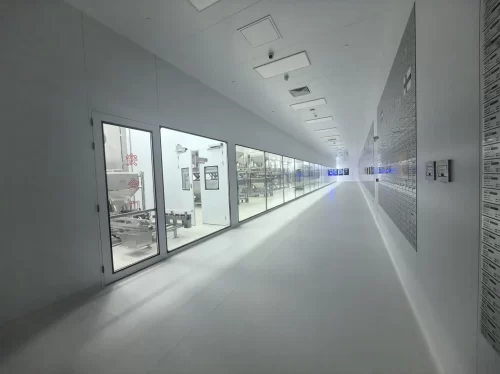
Advanced Medical Device Cleanroom Design: Achieving ISO Class 7 and Class 8 Compliance
Designing a cleanroom facility for medical device manufacturing presents unique engineering challenges beyond standard pharmaceutical applications. While structural elements like modular cleanroom wall panels and air handling units form the foundation, unique process requirements in sterile device manufacturing demand specialized design considerations to ensure compliance with ISO 14644, ISO 13485, and FDA cGMP standards.
1. Key Design Challenges for Class 7 & Class 8 Medical Device Cleanrooms
Advanced cleanroom requirements for medical device manufacturing necessitate addressing unique operational challenges before validation. These complexities directly impact long-term environmental stability and product quality:
- cGMP-Grade Wall Panel Selection: Medical device cleanrooms require non-shedding, highly durable wall systems with seamless jointing. Materials like powder-coated galvanized steel or HPL (High-Pressure Laminate) are engineered to withstand frequent cleaning with harsh disinfectant agents without degradation.
- Precision Pressure Differential Control: Maintaining stable positive pressure differentials (+10 to +15 Pascals) between adjacent classification zones (e.g., Component Prep → Class 8 Assembly → Class 7 Packaging) prevents cross-contamination during personnel and material transfer.
- Optimized Airflow Patterns: Preventing turbulent dead zones around automated assembly machinery requires strategic placing of HEPA/ULPA filtration units and low-level return air ducts to ensure continuous particle sweep.
- Smooth Integration of Utility Penetrations: Seamless sealing around electrical raceways, process gas piping, and pass-through boxes is critical to eliminate micro-gaps where particulate matter or bioburden can accumulate.
2. Technical Specifications & Cost Analysis
The table below provides standard engineering parameters and relative cost factors when designing ISO Class 7 and ISO Class 8 cleanrooms for medical device manufacturing:
| Parameters | ISO Class 7 (Class 10,000) | ISO Class 8 (Class 100,000) |
|---|---|---|
| Air Changes Per Hour (ACH) | 30 – 60 ACH | 15 – 25 ACH |
| HEPA Coverage Ratio | 15% – 25% of ceiling area | 5% – 15% of ceiling area |
| Recommended Wall Panel Thickness | 50 mm Sandwich Panel (Rockwool/PIR Core) | 50 mm Sandwich Panel (Paper Honeycomb/EPS Core) |
| Max Particles/m³ (≥0.5 µm) | 352,000 | 3,520,000 |
| Relative Cost Index | 1.3x – 1.5x Base Cost | 1.0x Base Cost |
| Primary Cost Drivers | HVAC Cooling/Heating Load & HEPA Units | Structural Enclosure & Basic Air Conditioning |
3. Design Optimization Strategies for Medical Device Compliance
To optimize both capital expenditure (CAPEX) and operational expenditure (OPEX), cleanroom engineers should apply the following strategic design principles:
- Integrated 3D BIM Modeling: Utilizing 3D BIM design allows validation teams to identify clash points between HVAC ductwork, structural steel, and process utilities before on-site installation, reducing costly rework.
- Factory-Precut Modular Panel Systems: Specifying modular wall and ceiling panels engineered for quick assembly ensures airtight connections while minimizing dust generation during construction.
- Energy-Efficient Variable Air Volume (VAV) Systems: Implementing VAV controls allows the HVAC system to reduce airflow during non-operational hours while maintaining positive pressure, yielding up to 30% in energy savings.
- Future-Proof Modular Layouts: Designing flexible room boundaries using demountable partition systems enables seamless expansion for future production lines without disrupting existing operations.
Get Expert Consultation for Your Medical Device Project
Planning an ISO Class 7 or Class 8 medical device cleanroom? Our engineering team provides turnkey support—from initial layout design and HVAC calculation to panel fabrication and validation support.
Contact Us Today to request a free technical consultation and budget evaluation for your facility.