
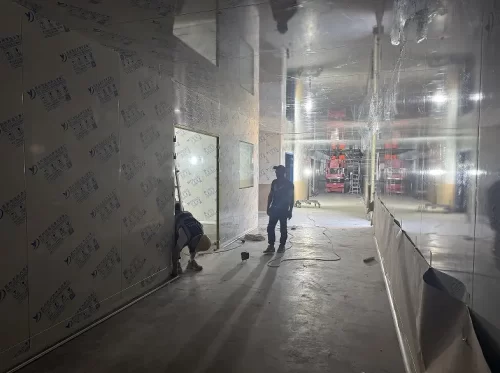
Modular Cleanroom Sandwich Panels: A Complete Buyer’s Guide on Materials and Fire Ratings
Modular cleanroom sandwich panels form the structural envelope of modern pharmaceutical factories, electronics cleanrooms, and operating suites. Choosing the correct combination of core insulation materials, outer skin sheets, and fire ratings is vital to ensuring structural integrity, regulatory compliance, and thermal performance during cleanroom construction.
1. Core Insulation Material Selection Guide
The core material determines the panel’s structural strength, acoustic dampening, thermal insulation, and fire resistance performance:
- Rockwool (Mineral Wool) Core: The gold standard for pharmaceutical and chemical facilities requiring non-combustible walls. Offers exceptional fire resistance (up to 2 hours / Class A) and acoustic insulation.
- Aluminum Honeycomb Core: Exceptionally lightweight with ultra-high flatness and compressive strength. Ideal for semiconductor, electronics, and aerospace cleanrooms requiring walk-on ceiling capabilities.
- Paper Honeycomb Core: A cost-effective, lightweight option suitable for general electronics packaging or low-tier cleanroom partitions where strict fire ratings are not mandated.
- PU / PIR Foam Core: Delivers superior thermal insulation performance, widely used in cold storage cleanroom environments and controlled temperature facilities.
2. Outer Skin Sheet Coatings and Material Options
Panel surface sheets must withstand harsh sanitization chemicals, including isopropyl alcohol and vaporized hydrogen peroxide (VHP):
- Color-Coated Steel (PPGI): Pre-painted galvanized steel with anti-bacterial and anti-static PE or PVDF coatings; highly durable and economical.
- Stainless Steel (SUS304 / SUS316L): Provides maximum corrosion resistance, ideal for wet process areas, sterile filling suites, and aggressive chemical processing zones.
- HPL (High-Pressure Laminate): Impact-resistant, scratch-proof, and highly resistant to chemical corrosion, popular in European hospital and biopharma designs.
3. Understanding International Fire Ratings for Cleanrooms
Engineering plans must adhere to regional building codes and insurer guidelines (e.g., FM Global):
- Class A / Non-Combustible (Rockwool): Meets ASTM E84 Class A, EN 13501-1 A2-s1, d0, and China GB8624 Class A standards. Essential for high-risk chemical or thermal processing zones.
- Flame Retardant Cores (PIR / Aluminum Honeycomb): Achieves B1 fire retardant classifications, slowing flame spread while maintaining structural support during emergencies.
4. Key Engineering Details: Modular Connections and Flush Design
High-quality cleanroom panels feature aluminum clip-in or tongue-and-groove jointing systems designed for seamless silicone sealing. All interior wall-to-wall and wall-to-ceiling junctions should integrate aluminum coving profiles to eliminate 90-degree dirt-trapping corners.
Plan Your Modular Cleanroom Construction with Farclean
Farclean manufactures custom cleanroom sandwich wall and ceiling panels tailored to international ISO and GMP standards. Contact our engineering team today to receive CAD shop drawings, fire test reports, and factory-direct pricing.