
Key Regulatory Requirements for Sterile Cleanrooms in Biotech Facilities
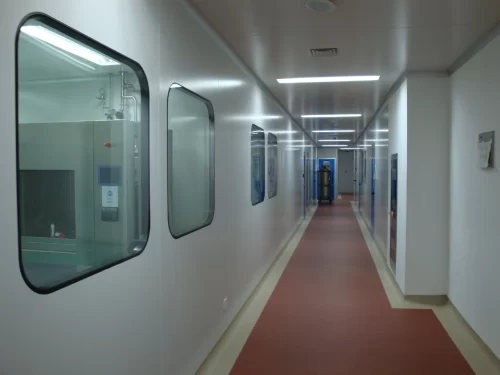
Key Regulatory Requirements for Sterile Cleanrooms in Biotech Facilities
Regulatory requirements for sterile cleanrooms in biotechnology facilities are designed to eliminate microbial, particulate, and pyrogen/endotoxin contamination. Biopharmaceutical products—such as monoclonal antibodies, vaccines, cell and gene therapies, and recombinant proteins—are highly sensitive to contamination and generally cannot undergo terminal heat sterilization, making strict aseptic processing controls mandatory.
The primary global regulatory frameworks governing sterile biotech cleanrooms include EU GMP Annex 1 (Manufacture of Sterile Medicinal Products), US FDA cGMP (21 CFR Parts 210/211 and Aseptic Processing Guidance), ISO 14644 (Cleanrooms and Associated Controlled Environments), and PIC/S GMP guidelines. This technical overview categorizes the essential regulatory expectations across critical operational domains.
1. Site-Wide Contamination Control Strategy (CCS)
Under current EU GMP Annex 1 and PIC/S expectations, facility owners must establish and maintain a formal, living, site-wide Contamination Control Strategy (CCS):
- Holistic Quality Integration: The CCS must connect cleanroom architecture, HVAC systems, equipment design, operator workflows, cleaning validation, environmental monitoring, utilities, and material transfers into a unified Quality Risk Management (QRM) framework.
- Life-Cycle Management: The CCS must be continuously reviewed and updated based on change control records, deviation investigations, and environmental monitoring trends.
2. Environmental Classification and Standards (Grade A to D)
Sterile manufacturing requires distinct environmental classifications based on operational bio-burden risk:
| GMP Grade | ISO Class (At-Rest) | ISO Class (In-Operation) | Primary Application in Biotech |
|---|---|---|---|
| Grade A | ISO Class 5 | ISO Class 5 | Critical core for aseptic operations (filling, stopper placement, sterile open connections). |
| Grade B | ISO Class 5 | ISO Class 7 | Background environment for Grade A aseptic processing cores. |
| Grade C | ISO Class 7 | ISO Class 8 | Preparation of solutions to be filtered, component washing, buffer prep. |
| Grade D | ISO Class 8 | Unclassified / ISO 8 | Less critical steps (handling of closed equipment, raw material receiving). |
- Grade A Viable Limit (“No Growth”): Regulatory standards enforce a strict zero growth (0 CFU) limit for Grade A areas. Any recovered viable growth in Grade A triggers a mandatory formal investigation.
- Particle Thresholds: Continuous monitoring for non-viable airborne particles (≥ 0.5 μm and ≥ 5.0 μm) is required during active Grade A processing.
3. Barrier Technologies & Physical Containment
Regulators strongly push for physical isolation between operators (the primary source of cleanroom contamination) and the sterile product core:
- Isolators & RABS: Utilizing Isolators or Restricted Access Barrier Systems (RABS) is standard practice for Grade A cores. Any open aseptic processing without physical barrier isolation requires documented engineering rationales in the CCS.
- Unidirectional Airflow (Laminar Flow): Grade A zones require continuous unidirectional air streams maintaining speeds of 0.36 m/s to 0.54 m/s (± 20%) to sweep particulates away from open product containers.
- Pressure Cascades: Adjacent cleanrooms of differing grades must maintain positive differential pressure cascades (typically 10 to 15 Pascals) to stop unconditioned air backflow.
4. Facility Architecture, Utilities, and Material Transfer
- Drain and Sink Prohibition: Sinks and drains are strictly prohibited in Grade A and Grade B zones to prevent waterborne reservoirs for organisms like Pseudomonas aeruginosa.
- Dynamic Pass Boxes & Interlocks: Material transfers into clean areas must pass through airlocks or dynamic Pass Boxes equipped with electromagnetic door interlocking and HEPA air purges.
- Vaporized Hydrogen Peroxide (VHP): Automated bio-decontamination (VHP ports) is required for isolators and material transfer hatches handling sterile components.
- Process Utilities: Water for Injection (WFI) loops and compressed process gases entering Grade A/B zones must be continuously monitored and sterile-filtered at the point of use.
5. Personnel Gowning, Data Integrity, and Process Validation
- Aseptic Gowning Qualification: Operators must pass gowning assessments (including contact plate monitoring of gloves, chest, and mask) prior to entering Grade A/B zones. Grade A/B gowning mandates zero exposed skin.
- Data Integrity (ALCOA+): Environmental monitoring logs, particle counter data, and thermal validation records must comply strictly with ALCOA+ data integrity guidelines, with audit trails routinely reviewed.
- PUPSIT Filter Testing: Sterilizing-grade liquid filters require Pre-Use Post-Sterilization Integrity Testing (PUPSIT) as well as post-use testing under EU GMP Annex 1 guidelines.
- Aseptic Process Simulation (Media Fills): Filling lines must undergo Nutrient Media Fill Studies every 6 months per shift per line to prove that the process can run sterile without contamination.
Consult With Farclean Engineers for GMP Compliant Cleanroom Systems
Build Your GMP Compliant Biotech Cleanroom With Farclean
Meeting complex regulatory mandates under EU GMP Annex 1 and FDA cGMP requires modular cleanroom architecture engineered specifically for sterile containment, smooth sanitization, and airtight pressure retention.
At Farclean, we specialize in complete modular cleanroom systems and high-efficiency purification hardware designed for sterile biopharmaceutical manufacturing:
- Flush Cleanroom Panels & Doors: Fire-rated PIR and Rockwool sandwich wall systems featuring coved corners and zero-sinks flush doors for Grade A–D environments.
- Dynamic Pass-Through Boxes & VHP Ports: Stainless steel interlocked transfer hatches with integrated HEPA filtration for sterile material transfer.
- Gel-Seal Fan Filter Units (FFUs): High-efficiency EC-motor FFUs delivering stable, non-turbulent laminar airflow for Grade A/B zones.
Get a Customized GMP Cleanroom Solution & Quote From Farclean