
Cleanroom Cleaning Protocols: Daily, Weekly, and Monthly Maintenance Schedules
Cleanroom Cleaning Protocols: Daily, Weekly, and Monthly Maintenance Schedules
Maintaining a controlled environment that meets strict ISO 14644 and EU GMP standards requires much more than advanced HVAC filtration and airtight architectural panels. A rigorous, structured cleanroom cleaning and disinfection protocol is the frontline defense against microbial accumulation, viable bio-burden, and surface particulate shedding.
Without disciplined daily, weekly, and monthly maintenance schedules, even the most advanced ISO Class 5 cleanroom can experience contamination spikes, leading to audit non-compliance and product batch failures. This technical guide outlines actionable sanitation schedules, approved wiping techniques, and disinfectant rotation best practices.
1. Cleanroom Maintenance Schedule Overview
| Frequency | Target Zones & Surfaces | Key Tasks & Procedures |
|---|---|---|
| Daily Maintenance | Critical work surfaces, flooring, airlocks, and waste bins. | Mop floors with approved disinfectant, wipe down operational workbenches, empty waste, and replace sticky mats. |
| Weekly Maintenance | Walls, doors, windows, pass box interiors, and furniture frames. | Wash walls and glass surfaces top-to-bottom, disinfect pass boxes, and execute disinfectant rotation (broad-spectrum to sporicidal). |
| Monthly Maintenance | Ceilings, light fixtures, FFU housings, and high-level air returns. | Deep cleaning of overhead structures, inspect HEPA housing frames, and review environmental monitoring trends. |
2. Daily Cleaning Protocols: The Core Defense
Daily cleaning focuses on high-touch surfaces and areas most susceptible to immediate particulate and microbial deposition during active shifts:
- Worksurface Disinfection: Wipe down stainless steel benches, laminar flow hoods, and equipment housings at the start and end of each shift using sterile 70% IPA or approved broad-spectrum disinfectants. Always wipe in a unidirectional overlapping motion (never back-and-forth scrubbing).
- Flooring Sanitation: Use cleanroom-grade flat mops with dual-bucket systems (one for disinfectant solution, one for rinse/dirty water). Mop from the cleanest areas toward the exit doors in parallel overlapping strokes.
- Waste Management & Consumables: Empty waste bins frequently; seal cleanroom bags inside the room before transferring them through pass boxes. Replace sticky mats at gowning room entryways when top layers lose tackiness.
3. Weekly Disinfection Protocols & Rotation Strategies
Weekly maintenance targets vertical and elevated surfaces where dust and microorganisms can settle over time. A critical component of weekly protocols is disinfectant rotation:
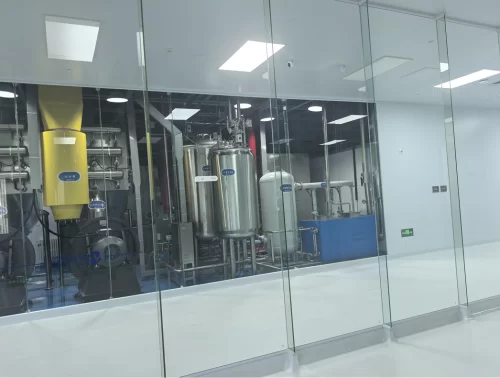
- Wall and Glass Cleaning: Clean cleanroom wall panels (PIR, rockwool, or stainless steel) and flush windows using specialized low-linting non-woven mops, working systematically from top to bottom.
- Pass Box & Air Shower Sanitization: Thoroughly scrub the interior walls, interlocking doors, and UV-C lamp fixtures of dynamic pass boxes.
- Disinfectant and Sporicidal Rotation: Alternate daily quaternary ammonium compounds (quats) or phenolics with a weekly or bi-weekly sporicidal agent (such as peracetic acid or hydrogen peroxide blends) to prevent microbial tolerance.
4. Monthly Deep Cleaning & Overhead Maintenance
Monthly protocols address hard-to-reach overhead areas that are shielded from daily foot traffic but critical for overall room hygiene:
- Ceiling Grids and FFU Exteriors: Wipe down ceiling T-bars, light fixtures, sprinkler heads, and the outer housings of Fan Filter Units (FFUs) using extension cleaning tools.
- Low-Level Return Air Grilles: Remove and sanitize stainless steel return air grilles and pre-filter frames to prevent dust accumulation.
- Audit & Log Review: Reconcile cleaning logs with environmental monitoring (particle counter and viable microbial data) to identify potential contamination trends.
Request Cleanroom Maintenance & Equipment Guidance From Farclean
Build a Cleanroom That is Easy to Clean With Farclean
Effective cleaning starts with proper cleanroom architecture. Walls with exposed joints, rough corners, or non-flush doors trap contaminants and make sanitation protocols difficult.
At Farclean, we engineer modular cleanroom systems specifically designed for effortless, high-efficiency cleaning and strict GMP compliance:
- Flush Cleanroom Wall & Ceiling Panels: Seamless joints with smooth, chemical-resistant powder-coated surfaces that withstand harsh disinfectants.
- Coved Internal Corners: Radius aluminum coving eliminating 90-degree dead angles where dust and bio-burden accumulate.
- Hermetically Sealed Flush Doors & Windows: Designed to sit flush with wall panels, preventing moisture trapping and simplifying wipe-down procedures.
Get a Customized Easy-to-Clean Modular Cleanroom Quote From Farclean