
Stainless Steel vs. HPL Cleanroom Door Price Comparison: Which Fits Your Budget?
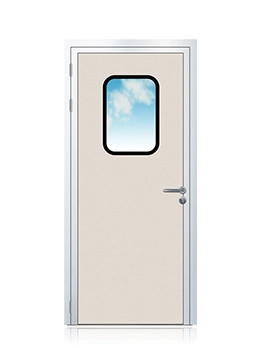
Selecting the right cleanroom door is a balance between upfront budget constraints and long-term regulatory compliance. Farclean manufactures high-precision Stainless Steel and High-Pressure Laminate (HPL) cleanroom doors, providing turnkey cleanroom solutions and factory-direct components tailored to your budget and operational demands.
Certified Industry Standards: ISO 14644-1 | EU GMP Grade A-D | US FDA 21 CFR | ISO 13485 | CE Certified
Understanding the Cost & Performance Drivers: Stainless Steel vs. HPL
Both Stainless Steel and High-Pressure Laminate (HPL) cleanroom doors are widely utilized across pharmaceutical, biotech, and electronic cleanrooms. However, understanding their price points and long-term performance is vital for optimal capital allocation.
- Stainless Steel Doors (Premium Capital Expenditure): Built using 304 or 316L grade stainless steel, offering superior structural strength, maximum impact resistance, and seamless resistance to continuous Vaporized Hydrogen Peroxide (VHP) sterilization.
- HPL Doors (Cost-Effective Versatility): Constructed with high-density solid phenolic cores and resin surfaces, HPL doors provide exceptional scratch resistance, excellent chemical resistance, and diverse color customization at a lower initial cost.
- Turnkey & Factory-Direct Value: As a complete cleanroom EPC solution provider and component manufacturer, Farclean optimizes your door procurement by 15%–25% through direct factory supply.
Key Selection Criteria Based on Project Budget
1. Initial Procurement Cost (CAPEX)
HPL cleanroom doors generally offer a 20% to 35% lower initial purchase price compared to 304/316L Stainless Steel doors, making them ideal for large-scale facilities or Class B/C/D zones with strict budget limits.
2. Chemical Resistance & Disinfection Standards
While HPL resists standard alcohol and chlorine-based disinfectants, Stainless Steel 316L is necessary for heavy VHP exposure and aggressive bio-decontamination protocols common in Grade A sterile suites.
3. Impact Resistance & Longevity (OPEX)
For high-traffic airlocks, material passage bays, or trolley corridors, Stainless Steel doors offer unbeatable resistance to denting and physical impact, lowering long-term maintenance costs.
4. Aesthetic Integration & Color Coding
HPL doors allow flexible color-coded zoning (e.g., distinguishing gowning rooms from core processing areas), whereas Stainless Steel delivers a uniform, high-tech metallic finish.
Stainless Steel vs. HPL Cleanroom Door Comparison
| Parameter / Feature | Stainless Steel Door (304 / 316L) | HPL Door (High-Pressure Laminate) |
|---|---|---|
| Relative Price Level | Higher Initial Cost (Premium) | Budget-Friendly (20%–35% Lower CAPEX) |
| Core Material & Frame | Stainless Steel Frame + Aluminum/Honeycomb Core | High-Density Phenolic Resin + Anodized Aluminum Frame |
| Chemical & VHP Resistance | Exceptional (Resists daily heavy VHP & harsh solvents) | Good (Resists common cleanroom sanitizers) |
| Impact & Scratch Resistance | High Impact Resistance; Moderate Scratch Sensitivity | High Scratch Resistance; Moderate Heavy Impact Resistance |
| Recommended Applications | GMP Grade A/B Core Areas, Sterile Filling, Heavy Trolley Airlocks | GMP Grade C/D Areas, Laboratories, Corridors, Gowning Rooms |
Recommended Application Scenarios
- Sterile Pharmaceutical Suites (GMP Grade A/B): Stainless steel doors are recommended for maximum sterilizability and zero particulate generation.
- Oral Solid Dosage (OSD) & Secondary Packaging: HPL doors provide a highly durable, cost-efficient solution for dust-controlled processing zones.
- Biotechnology & Research Laboratories: HPL doors offer customizable color coding for Biosafety Level (BSL) zoning while keeping capital costs optimized.
- Electronics & Precision Optics: Stainless steel or powder-coated steel doors paired with anti-static gaskets for static-free environments.
Featured Delivery: Mixed Material Strategy for a 3,500 m² Pharma Plant
Challenge: An international pharmaceutical client needed to balance strict GMP compliance with a tight project budget across a 3,500 m² formulation facility.
Solution: Farclean engineered a hybrid door supply plan—deploying 316L Stainless Steel Flush Doors in Grade A/B sterile processing rooms, and cost-effective HPL Doors in corridors, personnel airlocks, and packaging zones.
Result: The customer saved 22% on overall door procurement costs while seamlessly achieving full GMP audit approval.
Frequently Asked Questions
Why are Stainless Steel cleanroom doors more expensive than HPL doors?
Stainless steel doors involve higher raw material costs (304 or 316L stainless steel) and specialized fabrication processes, such as seamless welding, surface polishing, and precision sealing required for VHP resistance.
Can HPL doors withstand frequent cleaning and sanitization?
Yes. Farclean’s HPL doors feature high-density solid resin surfaces that are non-porous, water-resistant, and resistant to standard cleanroom cleaning chemicals like IPA and chlorine solutions.
Does Farclean supply turnkey cleanroom solutions along with doors?
Absolutely. Farclean provides full turnkey EPC cleanroom solutions, including sandwich wall/ceiling panels, HVAC systems, cleanroom lighting, and complete qualification (DQ/IQ/OQ) support.