
Cleanroom Solutions for Packaging and Printing
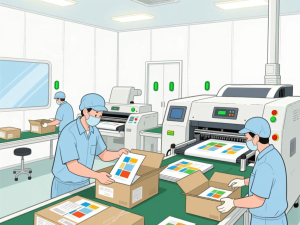
Cleanroom solutions for packaging and printing are becoming essential as brands demand higher product safety, consistent quality, and contamination-free production. In industries such as food packaging, pharmaceutical wrapping, cosmetic containers, and high-precision printing, even tiny particles can lead to defects, color inconsistencies, and product recalls. This article explains how professional cleanroom systems support modern packaging and printing manufacturing and why many factories are upgrading to controlled environments.
Why Packaging and Printing Require Cleanroom Environments
Packaging and printing processes involve delicate materials such as films, labels, foils, paper substrates, and inks. These materials are easily affected by dust, humidity, temperature changes, and static electricity. A cleanroom helps stabilize the environment and ensures that products meet international quality standards.
- Dust-free production: Prevents particles from adhering to films, paper, or packaging components.
- Stable temperature and humidity: Improves printing precision, ink performance, and adhesion.
- Better color consistency: A controlled environment keeps print color stable across batches.
- Higher production yield: Minimizes rework caused by contamination or environmental fluctuations.
- Compliance with industry standards: Supports ISO 14644 cleanroom classifications and GMP requirements.
Industries That Benefit from Cleanroom Packaging and Printing
Cleanroom systems are widely used in high-demand packaging and printing sectors where contamination control is critical.
- Food packaging – ensuring hygiene and avoiding particle contamination.
- Pharmaceutical and medical packaging – blister packs, sterile packaging, labels, and instruction sheets.
- Cosmetics packaging – achieving high appearance quality with dust-free surfaces.
- Electronics packaging – anti-static bags, protective films, precision printed labels.
- High-end printing – security printing, micro-printing, and color-critical production.
Key Cleanroom Components for Packaging and Printing Production
Professional cleanrooms integrate several systems to maintain clean, stable, and controlled working conditions.
1. Air Filtration and HVAC System
Uses HEPA or ULPA filters to maintain ISO Class 5–8 conditions. Precise temperature and humidity control prevents paper deformation, ink defects, and static buildup.
2. Cleanroom Modular Panels
Sandwich panels with anti-scratch and anti-static surfaces ensure fast construction and long-term stability in printing facilities.
3. Cleanroom Doors and Windows
Air-tight doors and double-glazed windows reduce air leakage and keep pressure differentials stable.
4. Pass Boxes and Material Transfer Systems
Prevent cross-contamination when transferring film rolls, printed sheets, inks, and packaging materials.
5. Air Showers and Personnel Flow Control
Remove contaminants from operators before entering the clean zone, improving product quality.
6. ESD Control Solutions
Essential for electronics packaging and film processing to prevent static-related printing defects.
Benefits of Cleanroom Solutions in Printing and Packaging Manufacturing
- Improved product appearance and surface quality
- Reduced printing errors and rejects
- Higher customer satisfaction and brand reputation
- Lower maintenance and cleaning costs over time
- Compliance with international safety and hygiene standards
Why Choose Farclean for Cleanroom Packaging and Printing Projects?
Farclean provides complete cleanroom engineering for packaging and printing manufacturers, covering design, HVAC, modular construction, equipment integration, and project implementation. With extensive export experience, Farclean delivers turnkey solutions that meet ISO and GMP standards and support fast installation, stable operation, and long-term reliability.
FAQ
What cleanroom class is suitable for packaging and printing?
Most factories use ISO Class 7–8. High-precision printing or medical packaging may require ISO Class 6.
How long does it take to build a cleanroom for printing production?
Depending on size and complexity, modular cleanrooms can be completed within 15–45 days.
Can existing printing workshops be upgraded to cleanroom environments?
Yes. Farclean can renovate existing spaces by adding modular walls, HVAC systems, filtration units, and correct zoning.
Does a cleanroom improve printing color accuracy?
Yes. Stable temperature, humidity, and dust control directly improve ink behavior and color consistency.
Conclusion
Cleanroom solutions are becoming essential for modern packaging and printing manufacturers seeking higher quality, better consistency, and stronger global competitiveness. By adopting a professional cleanroom system, companies can reduce defects, enhance brand reliability, and meet the growing demand for high-precision packaging. Farclean offers complete engineering support for companies planning to upgrade or build cleanroom-based production lines.